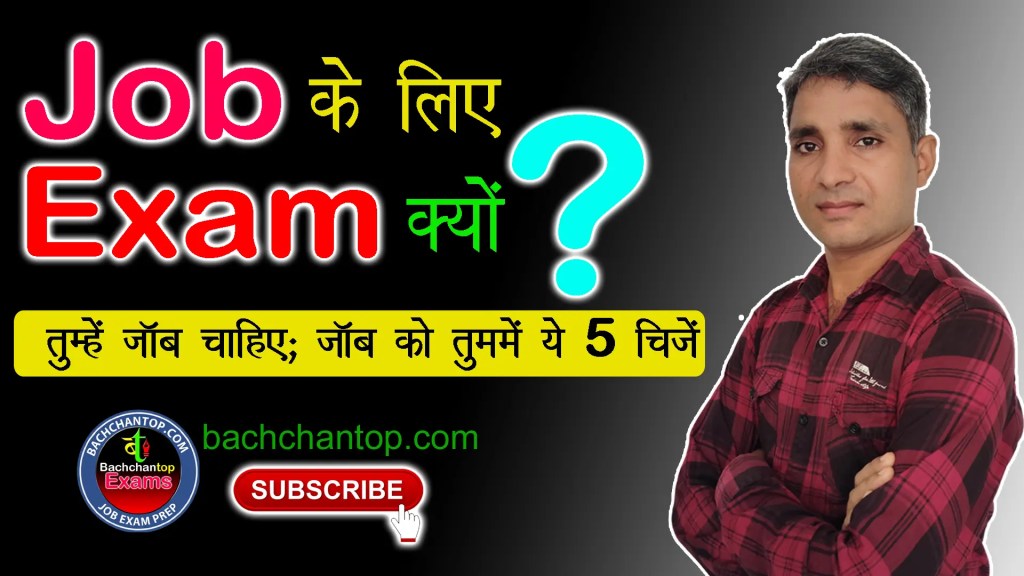
Exam Stages and Their Purpose
UPSC and other major competitive examinations do not test only the knowledge of candidates, but also evaluate their personality, analytical thinking, decision-making ability, and ethical values. Various stages such as Prelims, CSAT, Mains, Group Discussion, and Interview are designed to assess different qualities and competencies of students in a systematic manner.
Eligibility
For A JOB
In India
1. Preliminary Examination (Prelims)
(a) General Studies (GS)
This stage evaluates the following abilities of candidates —
- General awareness and current affairs knowledge
- Conceptual and factual understanding
- Quick decision-making ability
- Accuracy under time pressure
- Basic understanding of diverse subjects
(b) CSAT (Civil Services Aptitude Test)
CSAT is conducted to assess —
- Logical and analytical reasoning skills
- Numerical and mathematical aptitude
- Reading comprehension and language ability
- Problem-solving skills
- Time management and mental balance
2. Main Examination (Mains)
The Mains examination tests the depth of understanding and clarity of expression of the candidate.
It evaluates —
- In-depth subject knowledge
- Analytical and critical thinking
- Answer writing skills
- Logical presentation of ideas
- Social, economic, and political awareness
- Ethical values, integrity, and administrative aptitude (Ethics Paper)
3. Optional Subject
The Optional subject helps in evaluating —
- Subject-specific expertise
- Long-term study capacity
- Conceptual clarity
- Ability to apply theoretical knowledge in a practical manner
4. Group Discussion (GD)
(Applicable in some competitive examinations)
Group discussions assess —
- Communication and interpersonal skills
- Leadership qualities
- Teamwork and cooperation
- Ability to listen and respect others’ opinions
- Balanced and logical thinking
5. Interview / Personality Test
The Interview stage is considered the most crucial, as it evaluates the overall personality of the candidate.
This stage tests —
- Confidence and presence of mind
- Honesty and ethical integrity
- Decision-making ability
- Social sensitivity and awareness
- Practical intelligence
- Administrative attitude
- Emotional stability under pressure
Conclusion
UPSC and other competitive examinations are not limited to testing academic knowledge alone. They aim to evaluate a candidate’s —
- Intellectual capability
- Ethical character
- Practical understanding
- Leadership potential
- Sense of public service
Therefore, preparation for these examinations is not just about studying books, but also about holistic personality development.
 Bachchantop